
Shanghai Cycle Show 2026 Review: A More Realistic Market, A More Intense Competition
Following Taipei Cycle Show, Shanghai Cycle Show 2026 naturally became the next key observation point for the industry.
There were expectations that shifting global conditions might redirect more international buyers toward Shanghai.
However, from both on-site observation and industry media coverage, the outcome was more modest than expected:
- Visitor activity did not significantly improve — and appeared weaker compared to last year
International Buyers Are Present — But Not Active
International visitors were still visible across the halls.
However, the overall pattern was clear:
- Lower buyer density
- Shorter engagement time
- More observation than actual negotiation
- The presence of buyers did not translate into real purchasing momentum
This reflects a more fundamental reality:
- The market has not yet recovered — regardless of exhibition location
Product Development: More Iteration Than Breakthrough
From both on-site observation and media content (including coverage by Cyclingtime),
new products were present across multiple categories.
However, from a manufacturing perspective, most developments fall into:
- Extensions of existing product lines
- Minor functional improvements
- Design or specification adjustments
- Material experimentation
- Very few products showed the potential to reshape the market
Material Innovation: Interesting — But Still Experimental
One notable direction this year was the exploration of alternative materials,
including engineering plastics (such as POM) applied to frames or structural components.
These developments aim to:
- Reduce weight
- Lower production cost
- Simplify manufacturing
However, from an industry standpoint:
- These remain experimental rather than commercially mature solutions
Key concerns include:
- Structural strength and long-term durability
- Market acceptance
- Production scalability
Product Mix Shift: More Consumer Focus, Less Technical Depth
Another visible trend was the increased presence of consumer-oriented products,
including a significant proportion of kids bikes in certain halls.
The emphasis has shifted toward:
- Visual differentiation (colors, styling)
- Lifestyle appeal
Rather than:
- Structural innovation
- Functional performance
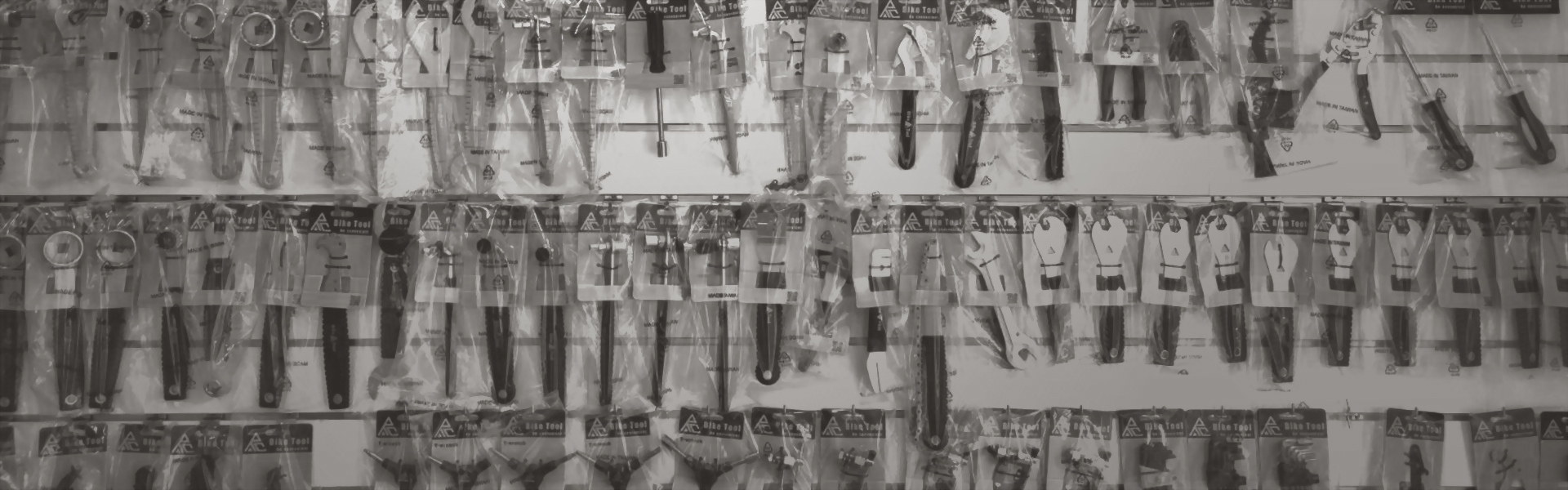
In the bike tool segment:
- New product development was limited, with few technical advancements
In some cases:
- Products showed high similarity to those previously exhibited at Taipei Cycle
Pricing Advantage vs. Manufacturing Reality
There is no denying:
- Some products offer significant price advantages — up to 50% lower than Taiwan-made tools
However, closer inspection reveals consistent differences:
- Surface finishing quality
- Edge treatment
- Structural precision
- Overall build consistency
- These differences may not be obvious at first glance, but become critical during actual use
For bike tools, performance is not defined by basic functionality alone:
- Long-term reliability and consistency are what truly matter
This creates a clear market split:

- Price-driven segments
- Quality-driven segments
Industry Trend: From Expansion to Involution
Overall, the industry is not expanding — it is intensifying.
- More competition, but within the same market size
This phenomenon is often described as:
- Involution
Characterized by:
- Increasing product similarity
- Stronger price competition
- More conservative innovation investment
- Competition is growing — but opportunities are not expanding at the same pace
The Role of Taiwan Manufacturing
In this environment, Taiwan’s role becomes more defined:
- Not competing at the lowest price — but delivering stability and reliability
Key strengths include:
- Structural consistency
- Precision control
- Long-term durability
- Stable production quality
- These are advantages that pricing alone cannot replace
Ray Cheng Perspective: Clarity Through Market Reality
For Ray Cheng, this exhibition reinforces a clear direction:
- We cannot build “average” products
Instead, we continue to focus on:
- Real-use-driven design
- Structural reliability and precision
- Functional integration without overdesign
- Flexible OEM / ODM capabilities
- Our goal is simple — to create tools that are actually used, not just displayed
Final Thought
If there is one way to summarize Shanghai Cycle Show 2026:
- The market hasn’t improved — competition has become more realistic
- True differentiation does not happen at exhibitions — it happens in real-world usage
Read More & Industry Discussion
For additional perspectives and ongoing industry discussions,
we also share insights through our LinkedIn channel:
? https://www.linkedin.com/in/chaijunglin2928
2026-05-11